Art Classes for Kids in Singapore
13 October 2026 · Tutor Circle
Art classes for kids in Singapore are weekly studios, holiday courses, or a teacher at home. The useful class teaches a child to look, choose materials, and finish a piece. A class that sends home an identical craft every week is a different product. NAFA’s Junior Art department takes children from age 5 to 17. That age span is the clearest public map of how children’s art is staged in Singapore.
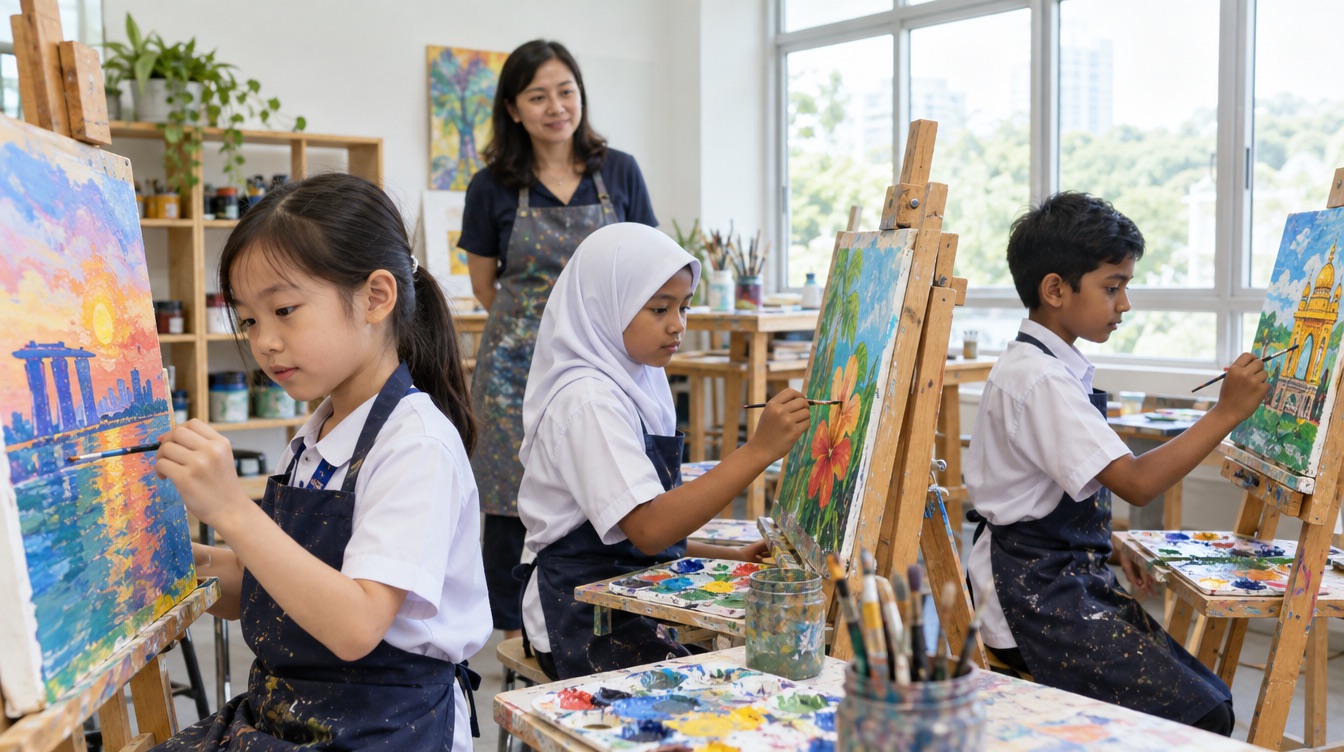
- NAFA Junior Art
- Ages 5 to 17: Kinder, Children, Lower Secondary, Upper Secondary, plus vacation courses
- Weekly studio
- The default for steady drawing and painting
- Holiday camp
- A trial of a medium. Too short, on its own, for a portfolio
- O-Level Art
- SEAB syllabus 6114 for 2026 school candidates. A different lesson from a kids’ craft class
- SOTA visual arts
- DSA audition and portfolio. A studio certificate is not an application
- Home tutor
- Tutor Circle can match an art tutor. Parents pay the tutor
What a children’s art class should do
School art already gives every child a period on the timetable. A paid class has to add something school cannot: a longer stretch of making, a teacher who sees that child’s work, and materials the classroom cupboard does not stock.
NAFA describes Junior Art as courses matched to age, from Kinder Art at 5 and 6 through to upper secondary at 15 to 17, with vacation courses in painting, clay, printmaking and related media. The department dates from 1976. [1] [2] Neighbourhood studios and community-centre courses follow the same idea at a smaller scale. The brand matters less than whether the child is making decisions.
- The child draws from something they can see, not only from a cartoon on a screen.
- The teacher shows a technique, then stops talking so the child can use it.
- Work is kept. A folder of ten drawings shows progress. A single painted stone does not.
- Class size leaves the teacher time to reach every child in the hour.
A studio, a holiday camp, or a tutor at home
| Format | Session | Fits | Ask |
|---|---|---|---|
| Weekly studio | 60 to 120 minutes in a small group | Steady skill through the school term | Class size, age band, what they take home |
| Holiday camp | Several mornings in June or December | Trying clay, print or paint for the first time | Whether the work is the child’s, or a kit |
| NAFA Junior Art | A staged campus course from age 5 | A long pathway and vacation options | The current intake and the campus location |
| Home tutor | One child, at a table that can take paint | A portfolio, or a timetable that misses every studio | Drying space, and who buys materials |
| School art plus CCA | Already in the school week | A child who is not asking for more | Nothing, until they want a portfolio |
How a 90-minute class is spent
This is a lesson plan, not a survey of studios. Parents can use it to judge a trial. If the demonstration lasts most of the hour, the child is watching.
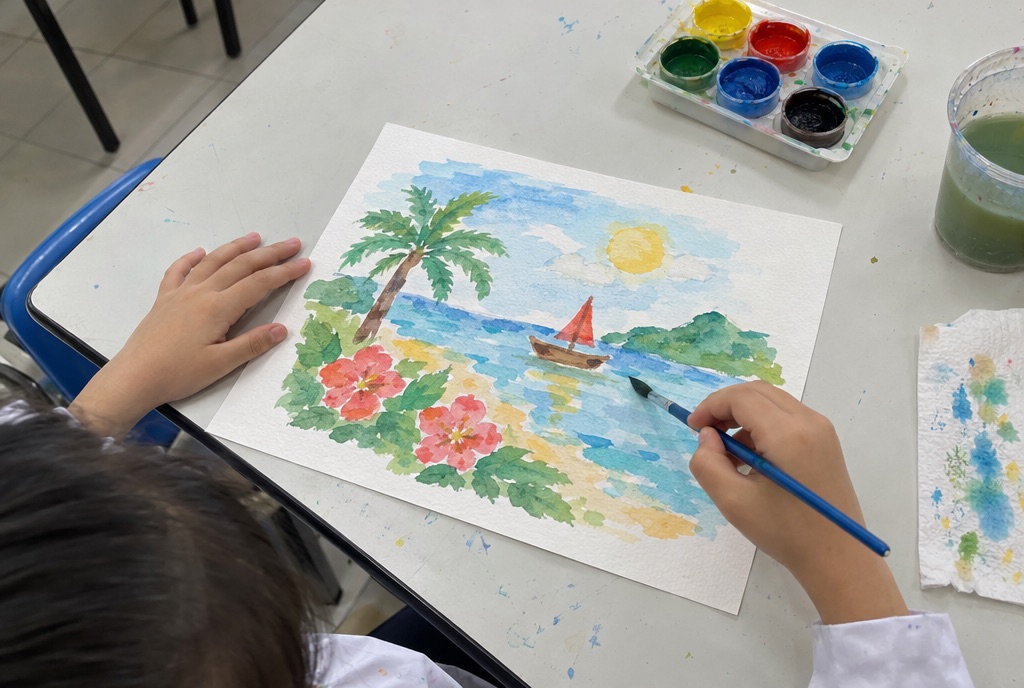
A 90-minute children’s art class, in minutes
Painting shirts, covered shoes, and a rule about scissors belong in the first email from the studio. If they are missing, ask before the trial.
Art classes by age
| Age | NAFA course name | A class at this age should |
|---|---|---|
| 5 to 6 | Kinder Art | Use big tools, name colours, finish a simple picture without a perfect copy |
| 7 to 12 | Children Art | Draw from observation, mix paint, keep a sketchbook |
| 13 to 14 | Lower Secondary Art | Try more than one medium and talk about choices |
| 15 to 17 | Upper Secondary Art | Build a body of work. Separate this from O-Level exam preparation if that is the goal |
Community clubs list short courses on OnePA. The run changes every term. Search the current quarter for a course near home, and use the same questions as for a private studio: age band, materials, and who teaches.
Portfolios, DSA and O-Level Art
A weekend class and an admissions portfolio are easy to confuse. School of the Arts admits Year 1 students through Direct School Admission. Visual arts applicants go through the Talent Academy. SOTA does not take part in the normal Secondary 1 posting. [4] The year’s preparation notes, on SOTA’s site, are the brief. A studio cannot file the application for you.
O-Level Art is a national exam subject. For 2026 school candidates, SEAB lists it as syllabus 6114. [3] A student sitting that paper needs the syllabus, the specimen papers, and a teacher who has prepared candidates. A general kids’ class will not cover the exam papers by accident.
What to keep in a folder
- Dated drawings from observation, not only cartoons.
- One piece shown in stages: photo of the start, the middle, the end.
- A short note, in the child’s words, on why they changed something.
- School art homework as well as studio work. Admissions panels can tell a coached set from a real one.
How to choose an art class
- Look at work by children the same age as yours.
- Ask how many children share the teacher.
- Ask what is included: paint, clay, canvas, firing, exam consultancy.
- Prefer a trial lesson over a term paid in advance.
- If the goal is music as well as art, the same family of choices is on the <TextLink href="/music-school-singapore">music school page</TextLink> and the <TextLink href="/singing-classes-for-kids">singing page</TextLink>.
For one-to-one lessons at home, request an art tutor and say the age and whether you need a portfolio. Parents pay the tutor for lessons conducted.
Questions parents ask
What age should a child start art classes in Singapore?
NAFA Junior Art starts at age 5 with Kinder Art, then Children Art for ages 7 to 12, and secondary courses up to age 17. A younger child can draw at home. A class is worth it when the child wants other children and a teacher, and can follow a short instruction. The class should still let them make the picture, not copy the teacher’s picture line for line.
How do I choose an art class for my child?
Visit, or ask for a trial. Look at work by children the same age, not only at a highlight wall of older students. Ask the class size, whether materials are included, and what the child will make in the first four weeks. A useful class teaches looking, mixing and finishing. A class that only produces a take-home craft each week is a different product.
Do art classes help with DSA or O-Level Art?
They can, if the teacher knows what the application or the exam asks for. School of the Arts visual arts admission is an audition and portfolio through the Talent Academy, not a certificate from a weekend studio. O-Level Art is a SEAB subject, syllabus 6114 for school candidates in 2026. A general kids’ class and an exam or portfolio class are different lessons. Say which one you want.
What should a children’s art lesson include?
A short look at an example or an object, a long stretch of making, and a few minutes to talk about what worked. The chart on this page is that plan for a 90-minute class. Materials should be safe for the age. Clay, paint and printmaking can wait until the studio can supervise them.
Is a home art tutor useful?
Yes, when the child needs a portfolio built over months, or when a studio timetable clashes with CCA. The family needs a table that can take paint, and storage for drying work. Tutor Circle can match an art tutor for home lessons. Parents pay the tutor.
Are holiday art camps enough?
A June or December camp is a good trial of whether the child likes the medium. NAFA runs vacation courses in craft, painting, clay, printmaking and related media. A camp does not replace a weekly class if the goal is a portfolio or steady drawing skill. Skill comes from repeating the same kind of looking, not from a new craft every day.
Sources
- Nanyang Academy of Fine Arts, “Junior Art.” The department dates from 1976 and states that it now has courses for children from age 5 to 17: Kinder Art (5–6), Children Art (7–12), Lower Secondary Art (13–14), Upper Secondary Art (15–17), a Young Artist Programme, and vacation courses. Accessed 13 October 2026. https://www.nafa.edu.sg/schools/school-of-young-talents/junior-arts
- Nanyang Academy of Fine Arts, School of Young Talents. Art students experiment with different media. Progress is tracked, and the school describes structured pathways across art, dance, drama and music. Accessed 13 October 2026. https://www.nafa.edu.sg/schools/school-of-young-talents
- Singapore Examinations and Assessment Board, “2026 GCE Ordinary Level Syllabuses Examined for School Candidates.” Art is listed as a revised syllabus, subject code 6114. Use the year’s syllabus and specimen papers on SEAB, not a studio’s own brief, if the student is sitting O-Level Art. Accessed 13 October 2026. https://www.seab.gov.sg/gce-o-level/o-level-syllabuses-examined-for-school-candidates-2026/
- School of the Arts, Singapore, Talent Academy. Visual arts is an audition area. Year 1 admission is through DSA. SOTA does not participate in the Secondary 1 posting exercise. A weekend art class does not submit the application. Accessed 13 October 2026. https://www.sota.edu.sg/talent-academy/