Cooking Classes in Singapore
13 October 2026 · Tutor Circle
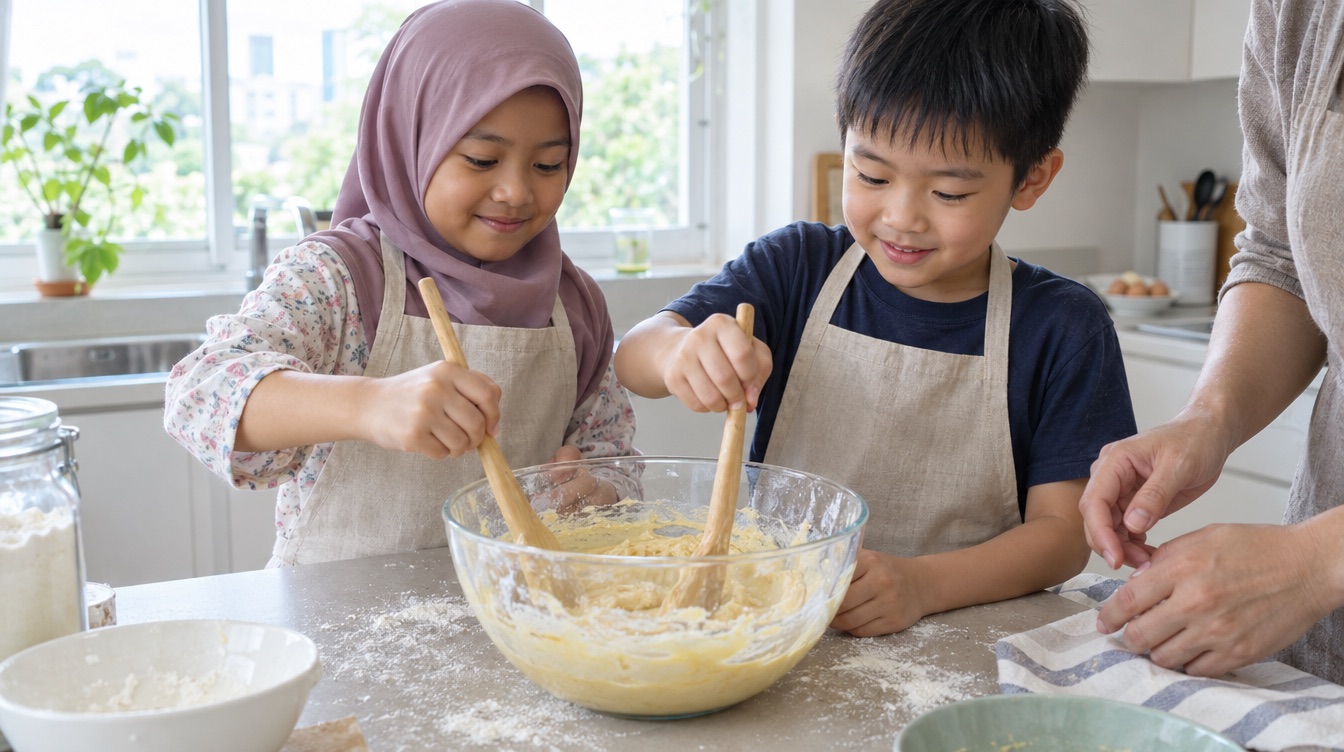
A cooking class in Singapore is a supervised session in a studio, a community club, a holiday camp, or your own kitchen. For children, the point is measuring, sequence and food safety, with a dish they can repeat at home. For adults, it is a skill class on a weeknight. The listing should say the age, the allergens, and whether pork or alcohol is in the recipe.
- Kids’ start
- Often from 5 or 6, with an adult on the heat. Knives and open flame come later
- Formats
- Weekly studio, holiday camp, community-club course, or a tutor at home
- Hygiene
- WHO’s five keys: clean, separate, cook, safe temperatures, safe ingredients
- Diet
- Ask about halal practice, pork, alcohol, nuts, egg, dairy, shellfish and gluten before you book
- Neighbourhood courses
- Community Clubs list current food courses on OnePA. The menu changes by term
- Home tutor
- Tutor Circle can match a cooking tutor. Parents pay the tutor
What to check before you pay
Singapore has a lot of baking workshops aimed at parents. The ones worth booking answer five questions in the listing, or in the first reply.
- Age and how many children share one adult.
- What the child will cook, and what they are not allowed to touch.
- Whether the kitchen is nut-free, and how halal requirements are handled.
- Whether ingredients, an apron and the take-home box are in the fee.
- What happens if the child is ill that morning. A perishable class needs a clearer postponement rule than a maths lesson.
Community Clubs publish short courses on OnePA, and the list changes every quarter. [3] A private studio publishes its own calendar. Neither listing is a ranking. Read the current page for the outlet you would actually travel to.
A studio, a camp, a club, or your kitchen
| Format | Typical session | Best for | Watch |
|---|---|---|---|
| Weekly kids’ studio | 60 to 120 minutes, small group | A child who wants to cook again next month | Ratio of adults to children |
| Holiday camp | Three to five mornings | June or December, and a first try | A new craft every day, and no skill repeated |
| Parent-and-child workshop | One sitting, often a weekend | A shared activity, not a course | A fee priced as an experience |
| Community Club course | A short term on OnePA | A class near home | The course may not run again next quarter |
| Adult evening class | One technique, one menu | A skill, or a cuisine | Whether you cook or watch a demo |
| Tutor at home | Your kitchen, your diet | Allergies, or a child who will not join a group | Who buys the ingredients |
How a children’s class should use the time
The split below is a lesson plan for a 90-minute children’s session. Use it to judge a trial. A class that is mostly a demonstration, with children adding sprinkles at the end, is a show.
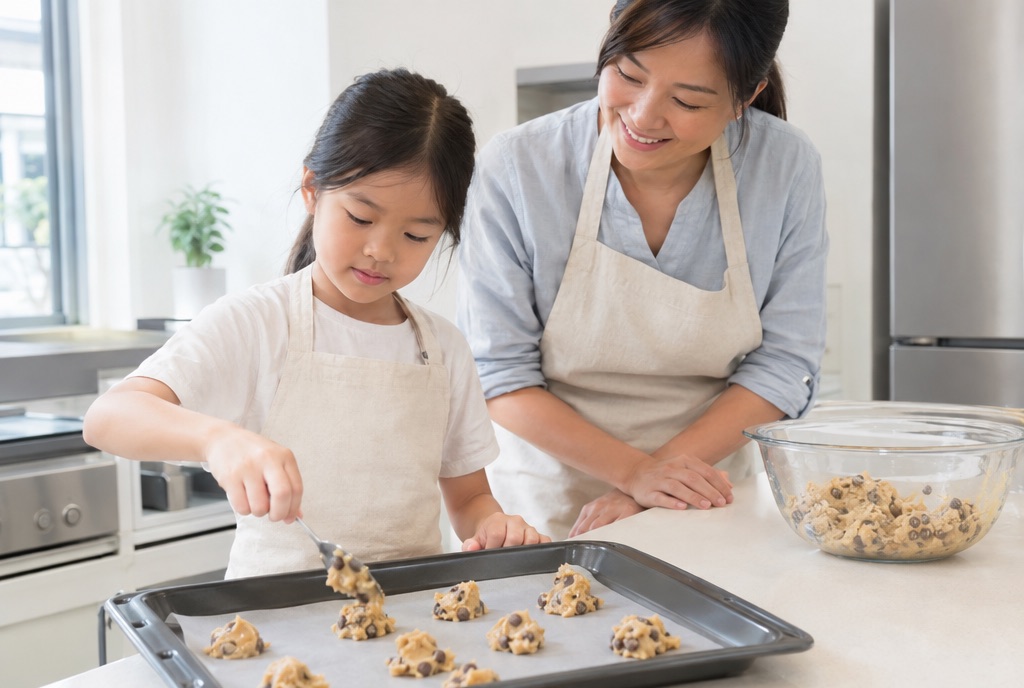
A 90-minute children’s cooking class, in minutes
WHO’s five keys belong in that first 10 minutes and in the cooking block: clean hands, separate boards for raw and ready-to-eat food, food cooked through, and cold food kept cold. [1]
What each age can reasonably do
| Age | The child can | An adult still does |
|---|---|---|
| 5 to 6 | Wash, pour, stir, shape, sprinkle | Hobs, ovens, sharp knives |
| 7 to 9 | Measure, crack eggs, use a table knife on soft food | Hot trays, raw meat, mandolines |
| 10 to 12 | Follow a full recipe with a chef’s knife under supervision | Unattended frying, deep-fat |
| 13 and above | Run a simple dish, including heat, if the class is staffed for it | Anything the listing still reserves for the teacher |
From a class to a part-time job
A baking camp does not qualify a teenager to work in a kitchen. Paid work has age rules. Children under 13 may not be employed. From 13 to under 15, work in a non-industrial setting is limited to light work, and industrial settings are generally closed. [4] The detail is on the part-time jobs page. Singapore Food Agency rules for food handlers apply when someone works in a licensed food business, which is a different question from a children’s workshop. [2]
Allergies, halal kitchens, and hygiene
Write the allergy in the booking, not at the door. Nuts, egg, dairy, shellfish, gluten and sesame are the ones to name even if the recipe looks plain, because the previous class may have used them on the same bench.
If the family keeps halal, ask whether pork or alcohol is used in that workshop, and whether pans are shared. A “pork-free menu” and a halal-certified kitchen are different claims. Take the claim the studio is willing to put in writing.
- Hands washed before food and after raw egg or raw meat.
- Separate boards and knives, or a clear wash between raw and cooked.
- Hot food hot, cold food cold, and a fridge if the class runs long.
- Hair tied, closed shoes, and no loose sleeves over a flame.
- A written note of what to do if a child reacts.
A cooking tutor in your kitchen
Home lessons suit a child who needs a halal or allergy-safe kitchen, or a family that wants the mess in its own sink. Say the age, the diet, and whether you want baking, everyday meals, or both. Tutor Circle matches the tutor. Parents pay for lessons conducted. Coordinators are on WhatsApp at +65 9628 4702, daily from 9am to 8pm.
If the child would rather draw or play an instrument on that afternoon, the same matching route covers art and piano.
Questions parents ask
What age can a child join a cooking class in Singapore?
Many studios take children from about 5 or 6 for no-heat or low-heat sessions: mixing, shaping and decorating, with an adult on the hob. Knife work and open flame belong with older children, in a class that states the age on the booking page. If the listing does not name an age and a ratio of adults to children, ask before you pay.
What should a kids’ cooking class teach?
Washing hands, measuring, following a sequence, and tasting what they made. The World Health Organization’s five keys to safer food are the hygiene standard to expect: keep clean, separate raw and cooked, cook thoroughly, keep food at safe temperatures, and use safe water and ingredients. A class that skips handwashing to save time is not a class to book.
Are cooking classes halal, and do they handle allergies?
Some are, and some are not. Singapore classes need a straight answer on pork, alcohol, and shared fryers, and on nuts, egg, dairy, shellfish and gluten. Send the allergy before the trial. A studio that says “we will try our best” without naming what is in the recipe has not planned for your child.
Is a holiday baking camp the same as a weekly class?
No. A camp in June or December is a good first try and a school-holiday plan. A weekly class is how a child learns to cook without a teacher standing on each step. Choose the camp if you want a trial. Choose the weekly class if you want the skill.
Can a cooking tutor come to our home?
Yes, and it suits a child with a strict diet or a kitchen the family wants them to use. You buy the ingredients, or agree that the tutor brings them and adds the cost. The same hygiene rules apply. Tutor Circle can match a cooking tutor. Parents pay the tutor for the lesson.
Do children need a food-hygiene certificate?
A children’s class is not a job in a licensed food shop. Food handlers who work in licensed food establishments follow Singapore Food Agency training rules. Those rules are for employment, not for a birthday-party workshop. The class should still keep hands, boards and temperatures under control. Older students who take a part-time F&B job should read the job rules separately.
Sources
Hygiene standards are from WHO and SFA. Age-of-work rules are from MOM and apply to jobs, not to a paid class the child attends as a student. Course fees are on the organiser’s own page.
- World Health Organization, “Food safety” fact sheet. WHO’s five keys to safer food are: keep clean, separate raw and cooked, cook thoroughly, keep food at safe temperatures, and use safe water and raw materials. A children’s cooking class should be able to show how it does each of these. Accessed 13 October 2026. https://www.who.int/news-room/fact-sheets/detail/food-safety
- Singapore Food Agency. SFA is the national authority for food safety in Singapore, including food businesses. A children’s workshop is not the same as a licensed outlet, but the hygiene habits should be recognisable. Accessed 13 October 2026. https://www.sfa.gov.sg/
- People’s Association, OnePA. Community Clubs list courses, including food and baking courses, by term. The listing for the quarter you want is the current source for neighbourhood classes, because the menu of courses changes. Accessed 13 October 2026. https://www.onepa.gov.sg/
- Ministry of Manpower, “Employing young persons and children.” This page is relevant when a teenager wants to move from a cooking class into paid kitchen or service work. Age limits differ for industrial and non-industrial settings. A class certificate is not a work pass. Accessed 13 October 2026. https://www.mom.gov.sg/employment-practices/young-persons-and-children