How to Become a Private Tutor in Singapore: A Beginner’s Guide
Families in Singapore spent $1.8 billion on private tuition in 2023, up from $1.4 billion in 2018 and $1.1 billion in 2013 [1][2]. The Ministry of Education cites the Department of Statistics Household Expenditure Survey for the latest total. Average household spending on tuition was $104.80 a month in that survey, compared with $88.40 in the previous one [2].
That demand is why university students, graduates, and career tutors can build a steady side income. This guide covers who is allowed to teach, when registration applies, what a beginner should charge, and how to take a first assignment.
Who can become a private tutor in Singapore?
There is no national teaching-diploma requirement for one-to-one home tuition. Citizens and permanent residents can offer paid lessons. Parents hire on evidence: the level you can teach, a recent grade or degree in that subject, and a profile that says when you are free.
A foreigner’s pass decides whether paid tuition is allowed. The Student’s Pass terms say the holder shall not engage in any form of paid employment, or in any business, profession, or occupation, unless they hold a valid work pass [3]. MOM publishes a separate work-pass exemption for full-time students at approved institutions, including a 16-hour weekly cap during term [4]. Exchange students are not covered. If you are not on that list, do not take tuition fees.
Dependant’s Pass holders need an employer to apply for an Employment Pass, S Pass, or Dependant’s Pass Work Permit before they work [5]. Private tuition arranged by yourself is not the same as a job an employer has sponsored. Read the MOM page for your pass before you advertise.
Current MOE teachers sit under public-service rules, not the home-tutor rules above. On 7 October 2019, MOE told Parliament that surveys indicated about 1 in 10 teachers were giving paid tuition, and that guidelines exist so outside work does not conflict with school duties [6]. A 2021 report said the old allowance of up to six hours a week was removed from 1 January 2021, and that paid tuition needs approval [7]. If you are still in service, ask your principal before you accept a student. Ex-teachers who have left service are not covered by that staff rule.
Do you need a licence or business registration?
Most beginners teaching one student at a time do not register a school. MOE says you must register a private school, its courses, and its teachers if the school offers education to 10 or more persons. That includes tuition centres teaching subjects taught in mainstream schools [8].
Teaching at your own flat is a home-based business. GoBusiness lists private tuition for no more than three students at a time as an activity under the Home-Based Business Scheme. Only owners, registered occupants, or tenants may work in it. Domestic workers cannot. HDB and URA do not require a separate approval when the scheme’s conditions are met. Signage on the home is not allowed, and the business must not disturb neighbours [9].
ACRA registration is a separate question. You must register a business that you run for profit on an ongoing basis, unless an exemption applies. The exemption GoBusiness quotes is narrow: you conduct the business using your full name as it appears on your NRIC. If you market yourself under any other name, register with ACRA [9].
SkillsFuture Singapore registration is for private education institutions offering specified full-time programmes, such as full-time international primary or secondary education, or certain post-secondary qualifications. SSG states that short courses are not required to register [10]. A weekly home lesson is not that kind of programme.
| Question | Typical one-to-one tutor | Where to confirm |
|---|---|---|
| May I be paid to teach? | Yes for citizens and PRs. Pass holders must check work rules first. | ICA Student’s Pass terms [3]; MOM [4][5] |
| Do I register a school? | Not for one student. Yes if you offer education to 10 or more persons. | MOE private school registration [8] |
| Can students come to my flat? | Yes, up to three at a time, under the home-business rules. | GoBusiness Home-Based Business Scheme [9] |
| Do I register a business name? | Only if you do not trade under your full NRIC name. | ACRA, as summarised by GoBusiness [9] |
| Do I declare the fees? | Yes. IRAS treats an independent private tuition teacher as self-employed. | IRAS [12][13] |
This is a practical checklist, not legal advice. Rules change, and your pass or employment contract can override the general case.
How big is the tuition market you are entering?
The chart below uses three published totals for household spending on private tuition, including lessons at home and at centres. The 2018 figure of $1.4 billion is the number MOE was asked about in Parliament [6]. The 2023 figure of $1.8 billion is the number MOE cited from the DOS Household Expenditure Survey [1]. The Straits Times reports the 2013 total as $1.1 billion from the same survey series [2].
Spending is uneven. In the latest survey, the top 20 percent of households by income spent $162.60 a month on tuition on average, and the bottom 20 percent spent $36.30 [2]. A new tutor should expect more assignments in areas and levels where families already pay for help, and should not treat the national total as a promise of personal income.
2018 and 2023 totals are cited by MOE from the DOS Household Expenditure Survey. The 2013 total is reported by The Straits Times from the same survey series. Includes lessons at home and at centres. (S$ billion)
What should a beginner charge?
Tutor Circle publishes home-tuition bands from past assignments. They are a reference, not a quote you must copy. For a first student, stay in the part-time column for that level. The full table, and a worked monthly example, is in How Much Should You Charge for Tuition in Singapore?.
| Level | Part-time tutor | Full-time tutor | School teacher |
|---|---|---|---|
| Upper primary | $30–40/h | $45–55/h | $60–85/h |
| Lower secondary | $30–40/h | $45–50/h | $60–85/h |
| Upper secondary | $35–45/h | $45–60/h | $65–95/h |
| Junior college | $50–65/h | $70–90/h | $100–130/h |
Source: Tutor Circle home tuition rates, described on the site as a general reference from past assignment data [11]. School-teacher rates are not a target for a new graduate.
How do you get the first student?
Pick one or two levels you can teach from a recent syllabus, such as Primary 5–6 Mathematics or O-Level Pure Chemistry. Write them in the first line of your profile. A line that says you teach every subject gives a parent nothing to match.
Tutor Circle’s tutor page states that joining is free and that tutors can access 1,000+ active assignments, with matching described as possible within 24 hours once the profile is complete. Treat that as the platform’s own claim, then do the work that makes a match likely: photo, subjects, highest relevant grade, locations you can reach, and a weekly timetable.
Create a tutor profile, then browse open assignments. Apply only where the level, subject, and area fit. The next guide, How to Find Tuition Assignments in Singapore and Get Your First Student, shows a sample application. Tutor profile examples show the difference between a vague bio and one a parent can shortlist.
- Keep a lesson note: topic, the error the student made, and the homework you set.
- Agree the rate, the place, and the weekly slot in writing before the first paid lesson.
- Keep records for tax. IRAS uses a private tuition teacher who finds students independently as an example of a self-employed person [12].
How is private tuition income taxed?
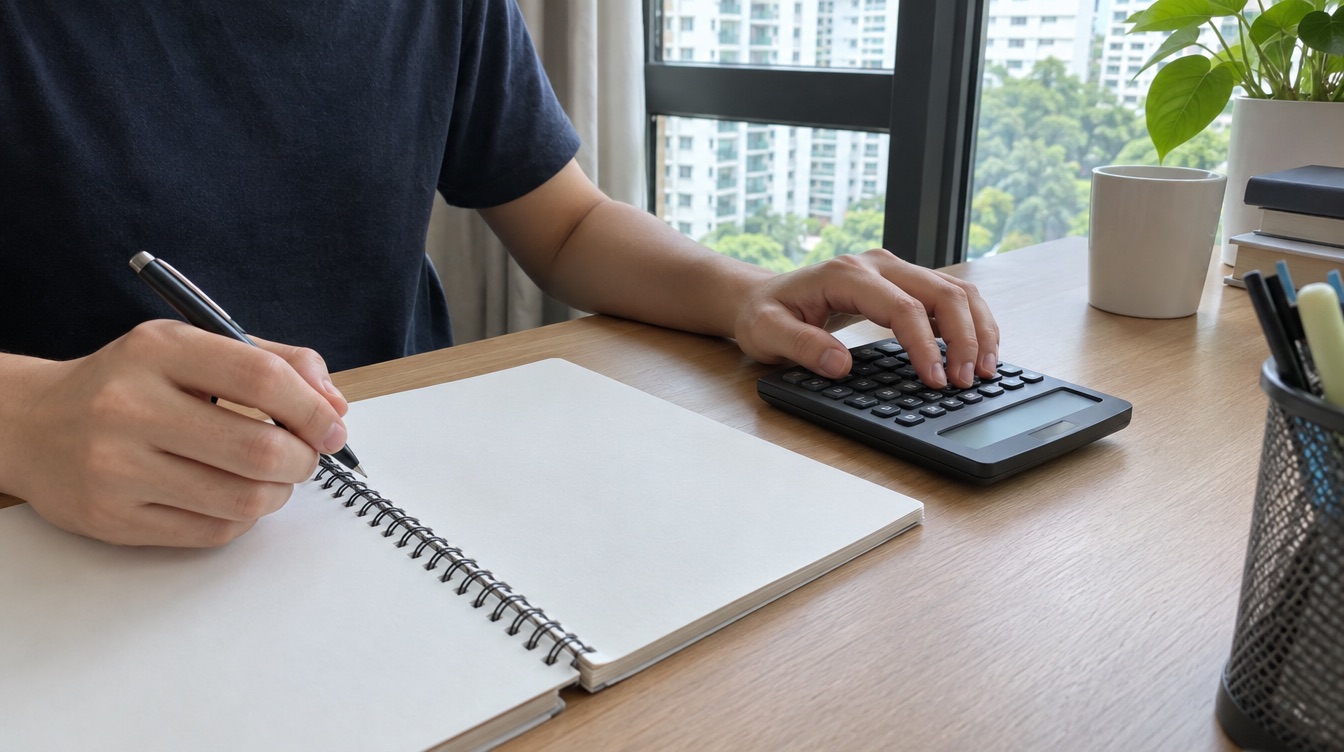
IRAS lists a private tuition teacher — someone not employed by a centre, who gets students through referrals — as a self-employed person. That income goes under Trade, Business, Profession or Vocation, not under employment salary [12].
You generally have to file if total income is more than $22,000, or self-employed net profit is more than $6,000, or you are a non-resident with Singapore income, or IRAS tells you to file [13]. If revenue is $200,000 or below, IRAS asks for a 2-line statement: revenue, and adjusted profit or loss. IRAS’s own example is a tuition teacher with $40,000 revenue and $10,000 of expenses, reporting $30,000 net [12].
Keep a list of dates, fees received, and costs such as transport and materials. Home-based business income is not pre-filled from an employer, so a “no-filing” notice for your salary does not remove the tuition income [9]. This is general information. Use the IRAS filing checker for your own return.
Frequently asked questions
Do I need a degree to tutor in Singapore?
No published rule requires a degree for one-to-one home tuition. Parents still ask for proof you know the subject. University students commonly take primary and lower secondary assignments. Junior college and IB families more often ask for a degree or a strong pre-university grade in that subject.
Can I teach a small group in my HDB flat?
The Home-Based Business Scheme allows private tuition for no more than three students at a time. Only people who live in the home may work in the business, and you should follow the nuisance and fire-safety conditions on the GoBusiness page [9].
Can a current school teacher moonlight as a tutor?
Not on the assumption that it is unrestricted. MOE’s 2019 parliamentary reply said about 1 in 10 teachers were giving paid tuition under public-service guidelines [6]. Later reporting said approval became stricter from 2021 [7]. Ask your principal, and do not advertise a school-teacher profile until you have a clear answer.
How do I join Tutor Circle?
Open the tutor page, create an account, and complete the profile with subjects, levels, education, and a photo. Then apply for assignments that match your location and timetable. Joining is free.
Conclusion
Start with a level you can teach from a paper you have sat or a class you have taught, price it inside the part-time band, and apply for assignments you can travel to. Join Tutor Circle as a tutor when the profile is ready.
Sources
- [1] Ministry of Education, parliamentary reply. 5 February 2025. Private Tuition.
- [2] The Straits Times, reporting the DOS Household Expenditure Survey. 2024–2025. Spending by S’pore families on private tuition rises to $1.8 billion in 2023.
- [3] Immigration & Checkpoints Authority. Accessed 13 October 2026. Terms and Conditions of Student’s Pass.
- [4] Ministry of Manpower. Accessed 13 October 2026. Work pass exemption for foreign students.
- [5] Ministry of Manpower. Accessed 13 October 2026. Dependant’s Pass: Working in Singapore.
- [6] Ministry of Education, parliamentary reply. 7 October 2019. Tuition.
- [7] Mothership, reporting an MOE spokesperson via CNA. 28 August 2021. MOE teachers upset and vexed over headhunting tactics by local tuition agency.
- [8] Ministry of Education. Accessed 13 October 2026. Register a private school.
- [9] GoBusiness. Accessed 13 October 2026. Home-Based Business Scheme.
- [10] SkillsFuture Singapore, TPGateway. Accessed 13 October 2026. Private Education Institutions FAQ.
- [11] Tutor Circle. 2026. Singapore Home Tuition Rates.
- [12] Inland Revenue Authority of Singapore. Accessed 13 October 2026. Calculating business income.
- [13] Inland Revenue Authority of Singapore. Accessed 13 October 2026. Filing responsibilities of self-employed individuals.